NewsNASA
NASA firms up the design of SR-1 Freedom, its nuclear Mars spacecraft
After an October review, NASA settled key parts of the fission-powered spacecraft that is to carry three SkyFall helicopters to Mars. Launch is planned for late 2028.

By Mars Progress · Edited by Aleksandar Simov
Published 2 min read
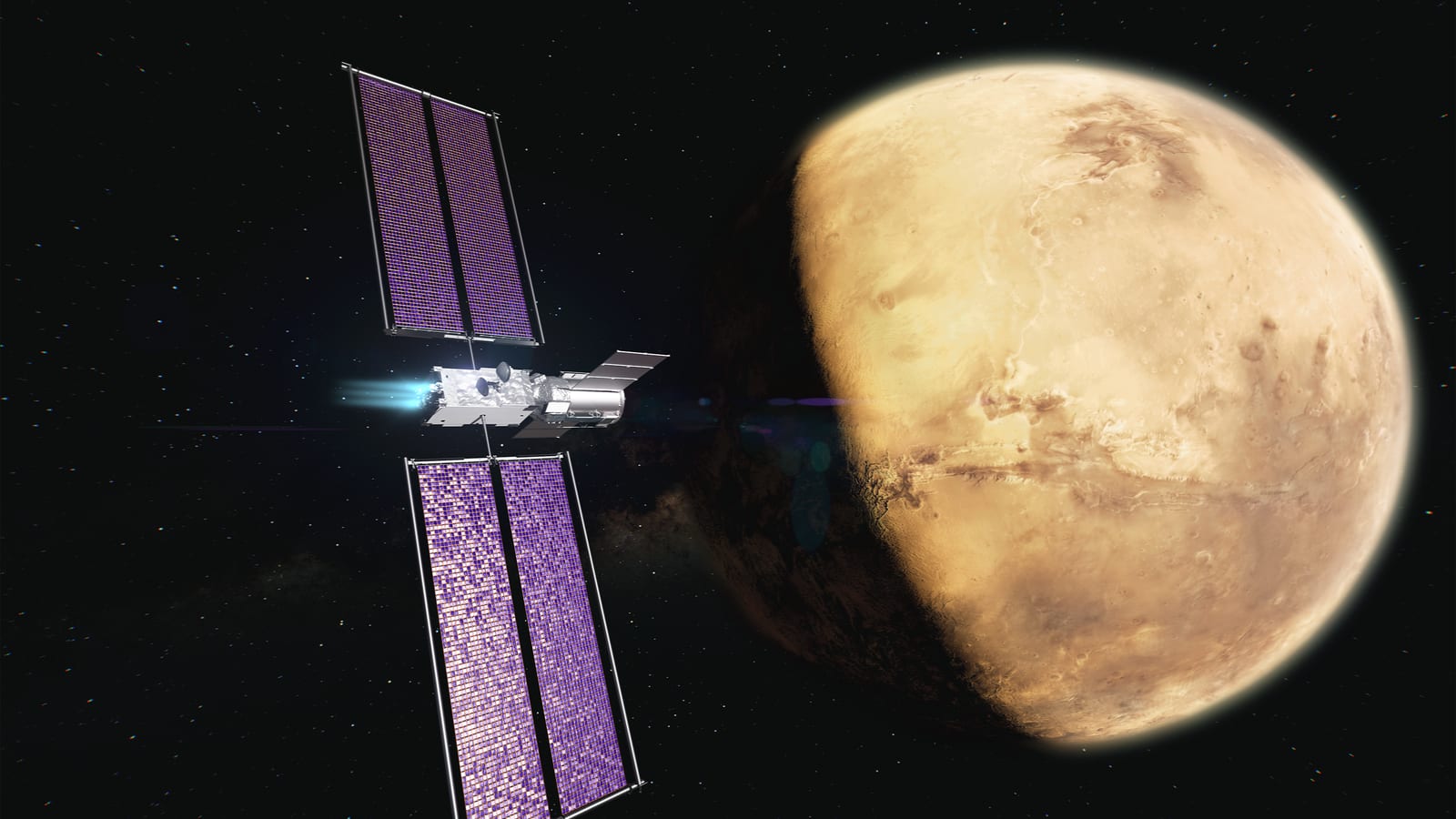
NASA has locked in key parts of the design of SR-1 Freedom, the nuclear-powered spacecraft it plans to launch in late 2028 to carry three helicopters to Mars. The decisions came out of a major design review in October at NASA’s Glenn Research Center in Cleveland, the agency said on Nov 24, 2026.[1]
What is SR-1 Freedom?
The first fission-powered spacecraft to travel beyond Earth orbit, NASA says. The name stands for Space Reactor-1. It will use both nuclear and solar power, and it is designed to show nuclear electric propulsion, in which a reactor makes the electricity for the thrusters, working in deep space for the first time. It will carry SkyFall, a capsule holding three helicopters that will study Mars’s geology and climate history and look for ice under the surface. NASA Administrator Jared Isaacman first presented the idea in March 2026, with a launch in the next Mars window as the goal.[1]
What did NASA decide?
A shorter boom, better shielding and bigger antennas. The boom that keeps the reactor away from the main body of the spacecraft will be shorter than in early drawings, to save weight and make assembly simpler. Better shielding will let the reactor sit closer to the rest of the spacecraft while still protecting its electronics and SkyFall from radiation. Larger X-band dishes will send data home from Mars. Still to be decided: the number of radiator panels, how much power the reactor will put out and how long it will run.[1]
NASA also gave Johns Hopkins University’s Applied Physics Laboratory a $39.3 million contract to design and build the system that sheds the reactor’s waste heat, working with the company Advanced Cooling Technologies.[1]
How will the flight work?
The reactor runs first, then the Sun takes over. Once it has left Earth orbit, SR-1 Freedom will switch on its reactor, raise the power gradually and run it for a while, sending performance data home, then shut it down. Solar arrays will power the cruise to Mars. After it delivers SkyFall to orbit around Mars, it will restart the reactor to collect more data.[1]
Why it matters for Mars
Bigger missions need more power than sunlight alone can give. Future spacecraft and surface operations “will require significantly more power than current systems can provide, particularly in environments where sunlight is limited or unavailable,” NASA said.[1] SR-1 Freedom is also how SkyFall’s helicopters will reach Mars, following Ingenuity, the first aircraft to fly on another world.
Its launch is on our Mars launch calendar, and Mars launch windows explains why late 2028 is the next chance to go.
Related
Sources
- NASA - Teams Lock in Mission Architecture for NASA’s SR-1 FreedomPrimary · checked Nov 25, 2026