NewsJapan (JAXA)
Japan’s MMX launches to bring back a piece of Phobos
An H3 rocket lifted off from Tanegashima at 19:41 UTC on Oct 19 (04:41 Japan time Oct 20). MMX separated about 71 minutes later and is due at Mars in August 2027.

By Mars Progress · Edited by Aleksandar Simov
Published 2 min read
Update, Oct 21, 2026: JAXA said on Oct 21 that MMX has finished its first critical operations and is in good health. All changes
Updated What changed (1)Sources (7)
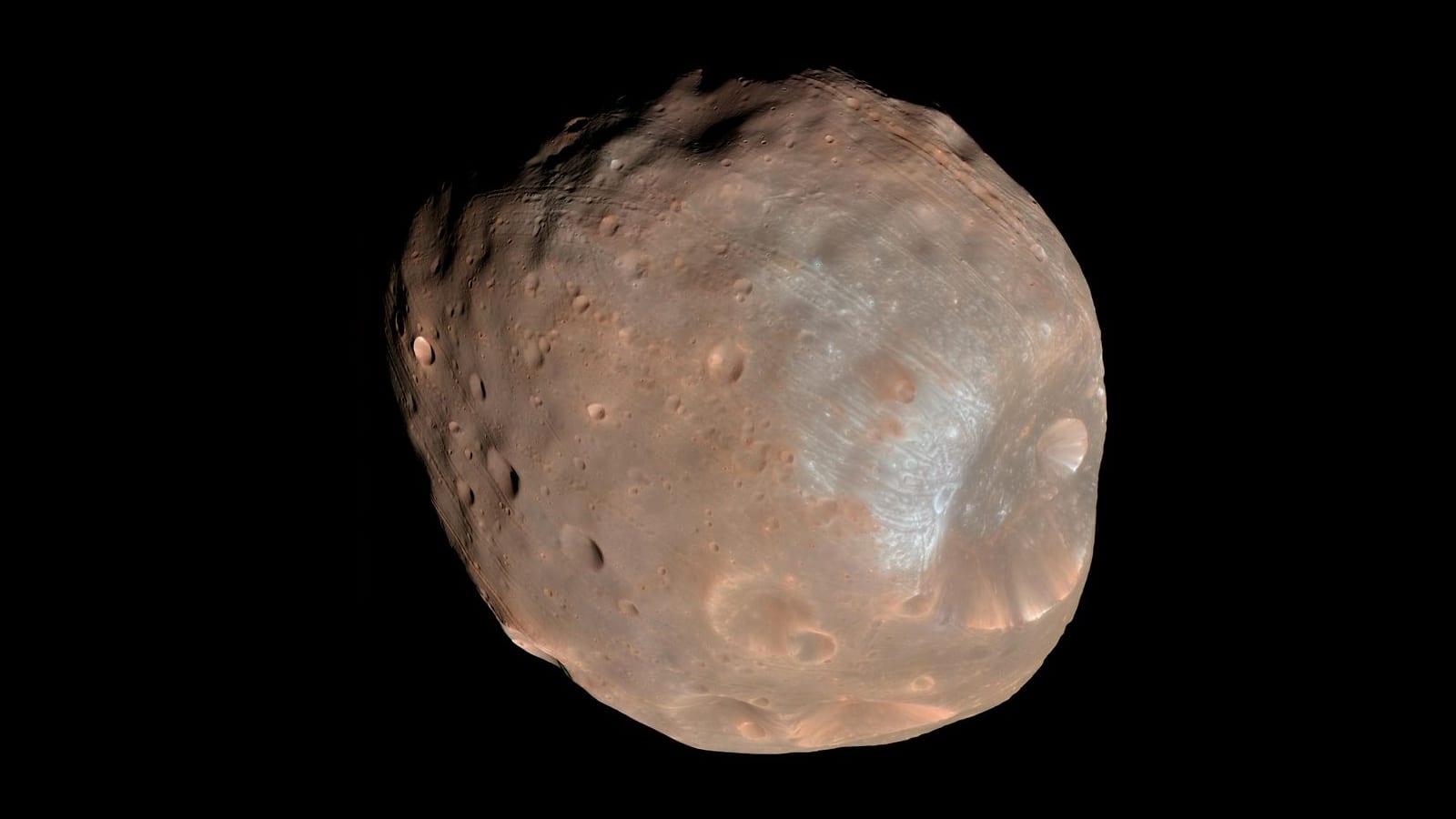
Japan’s MMX spacecraft is on its way to Mars after an H3 rocket launched it from Tanegashima at 19:41 UTC on Oct 19, 2026 (04:41 Japan time on Oct 20). It separated from the rocket about 71 minutes after liftoff and was put on its planned path, JAXA said.[1]
The launch came at the time JAXA had confirmed on Oct 18.[3]
How did the launch go?
As planned, JAXA said.[1] The H3 dropped its four solid boosters just before two minutes into the flight and its nose fairing about 80 seconds later. About 1 hour and 4 minutes after liftoff, the rocket’s upper stage fired for a second time, for about six and a half minutes, to send MMX toward Mars. MMX was released about a minute after that burn ended, and viewers of JAXA’s webcast heard cheers in mission control, Space.com reported.[4]
It was the tenth flight of the H3, which JAXA and Mitsubishi Heavy Industries developed together.[4] After a failure in December 2025, the rocket flew again in June and August 2026; this was its third success in a row, the Minami-Nippon Shimbun reported. Nikkei put the H3’s success rate at 80%, up from 78%.[5][6]
By Oct 21, MMX had unfolded its solar arrays, taken control of its orientation on all three axes and released its medium-gain antenna, finishing its first critical operations. JAXA said the spacecraft is in good health and is now checking its onboard equipment before the cruise to Mars.[7]
What happens next?
MMX should reach Mars in August 2027, NASA says.[2] It will then study Phobos, the larger of Mars’s two moons, from close by. A small French-German rover, IDEFIX, is due to be dropped onto Phobos in late 2028 or early 2029, Space.com reported.[4] MMX itself is to collect a sample of Phobos’s surface no earlier than December 2028 and deliver it to Earth in 2031, NASA says, and NASA will look after about 15% of it at its Johnson Space Center.[2]
Before it heads home, MMX also plans to fly past Deimos, Mars’s smaller moon, several times. The return capsule is to land in Australia, Space.com reported.[4]
Why it matters for Mars
No mission has yet brought back material from Mars or its moons. MMX aims to be the first, Nikkei reported.[5] Its sample should help settle where Phobos and Deimos came from: they may be asteroids that Mars captured, or debris thrown into orbit when something large hit Mars.[4] Phobos is also expected to hold a little Martian soil, Nikkei reported, so the capsule could bring back some of Mars itself.[5]
Follow MMX’s path, its samplers and every update on our MMX mission page. Our timeline lists all 51 launches to Mars since 1960.
Related
Updates
- UpdateJAXA said on Oct 21 that MMX has finished its first critical operations and is in good health.
New information added since the story was published, newest first.
Sources
- JAXA - Launch result of the Martian Moons eXploration (MMX) spacecraft aboard H3 Launch Vehicle flight No.10Primary · checked Oct 20, 2026
- NASA Science - NASA to Help Unlock Mysteries of Mars’ Moons in Upcoming Mission (Oct 15, 2026)Primary · checked Oct 20, 2026
- JAXA - Launch time of the Martian Moons eXploration (MMX) spacecraft aboard H3 Launch Vehicle Flight No.10Primary · checked Oct 19, 2026
- Space.com - Japan launches historic MMX sample-return mission to Mars’ moon PhobosSecondary · checked Oct 20, 2026
- Nikkei - H3ロケット、火星衛星の探査機載せ打ち上げ成功 サンプル採取めざす (Japanese)Secondary · checked Oct 19, 2026
- Minami-Nippon Shimbun (via Yahoo! News Japan) - 「H3」10号機打ち上げ成功、火星衛星探査機を軌道投入 (Japanese)Secondary · checked Oct 19, 2026
- JAXA - Completion of the Initial Critical Operations Phase of the Martian Moons eXploration (MMX) SpacecraftPrimary · checked Oct 21, 2026